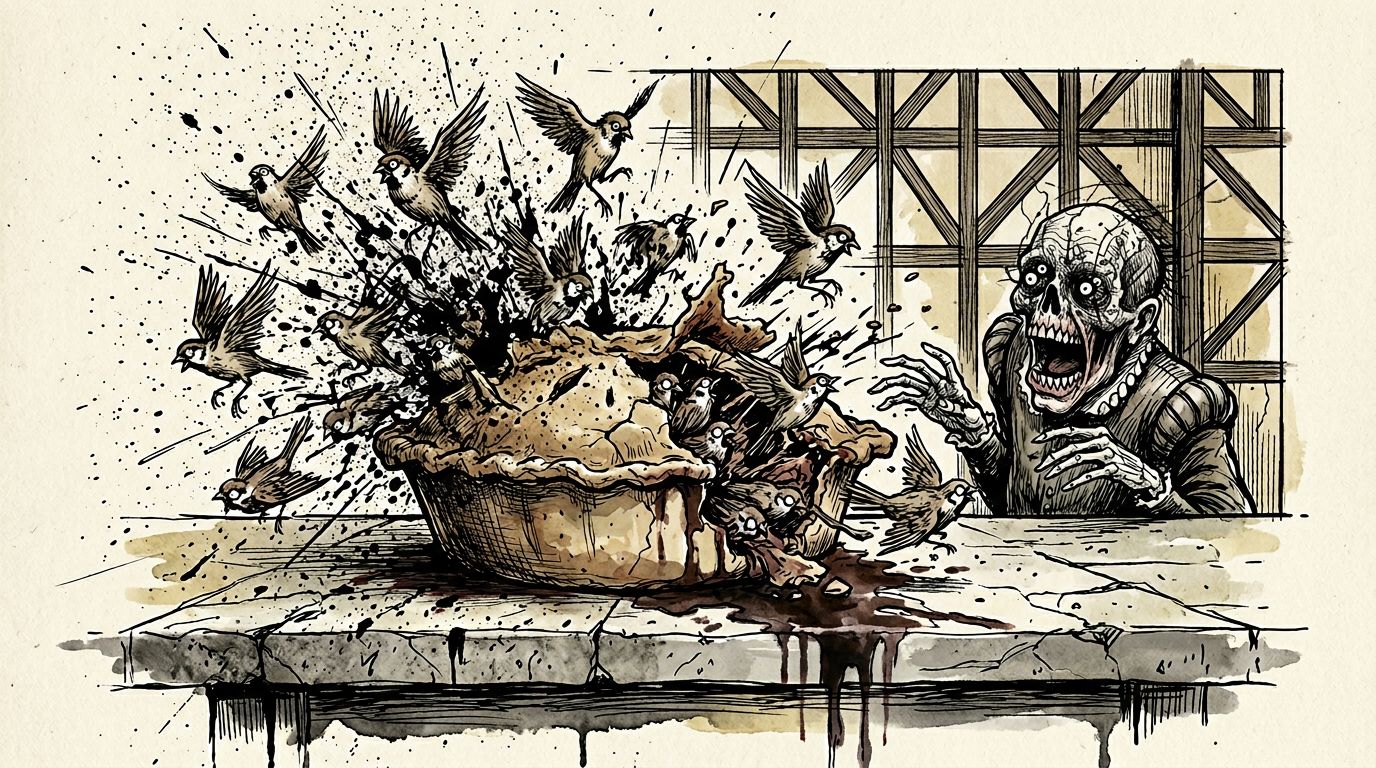
A pie with serious main-character energy
Look, nobody wakes up thinking, "I can't wait to read about medieval bird pie today." And yet, here you are, choosing chaos with purpose.
Historically, sparrow pie was a real medieval and Tudor thing in England: small birds like sparrows, larks, and thrushes baked into pies as a flex of ingenuity and a "waste nothing" food culture, served from humble tables to fancy feasts (English Heritage). Today, we are absolutely not doing that with actual sparrows, because modern Britain has laws and, more importantly, sparrows have had a rough century. So we are making the vibe, not the crime.
Why this works (and why history would approve)
This recipe works because it keeps the Tudor spirit: rich meat, warm spice, and a "use what you've got" attitude - without trying to speedrun a conservation lecture.
Medieval cookery wasn’t just vibes, it was strategy: small-bird pies showed off thrift and technique in one buttery package (English Heritage). But in the UK, killing or taking most wild birds (including house sparrows) is illegal under modern protection laws, and house sparrows have declined by roughly 60-70% since the mid-1970s and sit on the Red List (RSPB, BTO).
So we do what the historical-recipe revival crowd does: we swap in ethically sourced pigeon (squab) or farmed quail for that small-game richness, no villain arc required (Tasting History, Great British Chefs).
Ingredients (medieval mood, modern morals)
- 500 g pigeon (squab) or farmed quail meat, boneless, chopped
- 1 tbsp butter or dripping
- 1 small onion, finely chopped
- 2 cloves garlic, minced
- 150 g mushrooms, sliced
- 1 tbsp flour
- 200 ml chicken stock
- 100 ml dry cider or white wine
- 1 tsp salt, plus more to taste
- 1/2 tsp black pepper
- 1/2 tsp ground mace (or nutmeg)
- 1/2 tsp ground ginger
- 1/4 tsp ground cloves (optional, but delightfully extra)
- 1 tbsp chopped parsley
- 1 tsp lemon zest (optional, for "I went to finishing school" brightness)
- 1 sheet puff pastry (or shortcrust if you are Team Sturdy)
- 1 egg, beaten (for egg wash)
Note: This is a historical-style bird pie, not a "surprise pie" with live birds. The "four and twenty blackbirds" idea is linked to real banquet theatrics, but we are keeping our entertainment strictly in the group chat (Britannica).
Instructions (your kitchen, now featuring a Tudor subplot)
Preheat and choose your destiny. Heat your oven to 200 C (180 C fan). Decide your crust: puff pastry for drama, shortcrust for reliability. Both are valid, like streaming services you pay for but never cancel.
Brown the meat like you mean it. In a large pan over medium-high heat, melt the butter or dripping. Add pigeon or quail and brown it well, 4-6 minutes. You want color, not grey sadness. Remove to a bowl.
Build the flavor base. In the same pan, add onion and cook 3-4 minutes until softened. Add garlic and mushrooms and cook another 4-5 minutes, until the mushrooms stop pretending they are mostly water.
Thicken the plot. Sprinkle in the flour and stir for 1 minute. This is your sauce insurance policy.
Make it saucy, not soggy. Slowly add stock while stirring, then add cider or wine. Bring to a gentle simmer.
Season like a time traveler. Add salt, pepper, mace (or nutmeg), ginger, and cloves if using. Medieval and Tudor cooking loved warming spices, especially in meat dishes, because it made everything taste like a feast even when it was Tuesday.
Return the meat and reduce. Add the browned meat back in. Simmer 8-10 minutes until the mixture thickens to a spoon-coating consistency. Stir in parsley and optional lemon zest.
Cool it (literally). Turn off the heat and let the filling cool 10-15 minutes. Hot filling plus pastry equals steam chaos and a bottom crust that gives up on life.
Assemble your pie. Spoon the filling into a pie dish. Lay the pastry over the top, crimp the edges, and cut a small vent in the center. This vent is the pie’s emotional outlet.
Gloss it up. Brush pastry with beaten egg for that golden "I definitely have my life together" finish.
Bake. Bake 25-35 minutes, or until deeply golden and crisp. If it browns too fast, loosely tent with foil.
Rest and serve. Rest 10 minutes before slicing. Serve with buttered greens or roasted root veg.
If you’re wondering why we are not using sparrows: beyond legality, the house sparrow’s decline and Red List status make any nostalgic revival a hard no (RSPB, BTO). Consider this pie a tribute to history, not an audition for villainy.
Nutrition & timing (because modern life loves a dashboard)
| Metric | Estimate |
|---|---|
| Prep time | 20 minutes |
| Cook time | 40 minutes |
| Total time | 60 minutes |
| Servings | 4 |
| Calories | ~520 per serving |
| Protein | ~32 g |
| Carbs | ~35 g |
| Fat | ~28 g |
These numbers vary by pastry choice and whether your "tablespoon" is a calm, measured spoon or an emotional support scoop.
Tips & variations (choose your own medieval adventure)
- Use pigeon (squab) for deeper, gamey richness or farmed quail for a gentler, slightly sweeter bite. Both are common modern stand-ins for historical bird pies (Great British Chefs).
- Want it more historically inspired? Add a pinch more warming spice, but keep cloves restrained unless you want the filling to taste like a very confident candle.
- Add dried fruit (a few chopped prunes or raisins) for a sweet-savory nod that feels period-appropriate.
- For a gastropub vibe, stir in crispy bacon lardons. For a stricter vibe, skip it.
- Make mini pies for maximum drama and better crust-to-filling ratio.
- If you’re here for the food-history rabbit hole, sparrow eating is not uniquely British: small birds have been eaten across Europe, Asia, and the Middle East, which puts this whole idea in a bigger global context (Oxford Companion to Food).
FAQ (yes, we are talking about that nursery rhyme)
Was sparrow pie actually real?
Yes. Small-bird pies are documented in medieval and Tudor England, and sparrows were among the birds used in this "waste nothing" approach to food (English Heritage).
Is this connected to "Sing a Song of Sixpence"?
Very likely in spirit. The rhyme about "four and twenty blackbirds" is widely believed to echo real banquet "surprise pies" that could include live birds for theatrical effect (Britannica). Our version is a surprise only in the "wow, that’s delicious" sense.
Can I legally cook sparrows in the UK?
No. Modern bird protection laws and conservation status make it illegal and environmentally irresponsible. House sparrows are Red Listed due to major population declines (RSPB, BTO).
Why do people even revive recipes like this?
Because historical cooking is having a moment, fueled by food historians and creators recreating old dishes for modern audiences, often with ethical substitutions (Tasting History). Also, it’s way more fun than it has any right to be.
What’s the closest ethical substitute?
Pigeon (squab) or farmed quail. You get that small-game richness without endangering anything that currently lives in your hedge.

"This blog has transformed my cooking skills! I find the recipes easy to follow and incredibly delicious."
Join the Conversation Today!
Share your thoughts, connect with us, and never miss a delicious update again!
